Contemporary
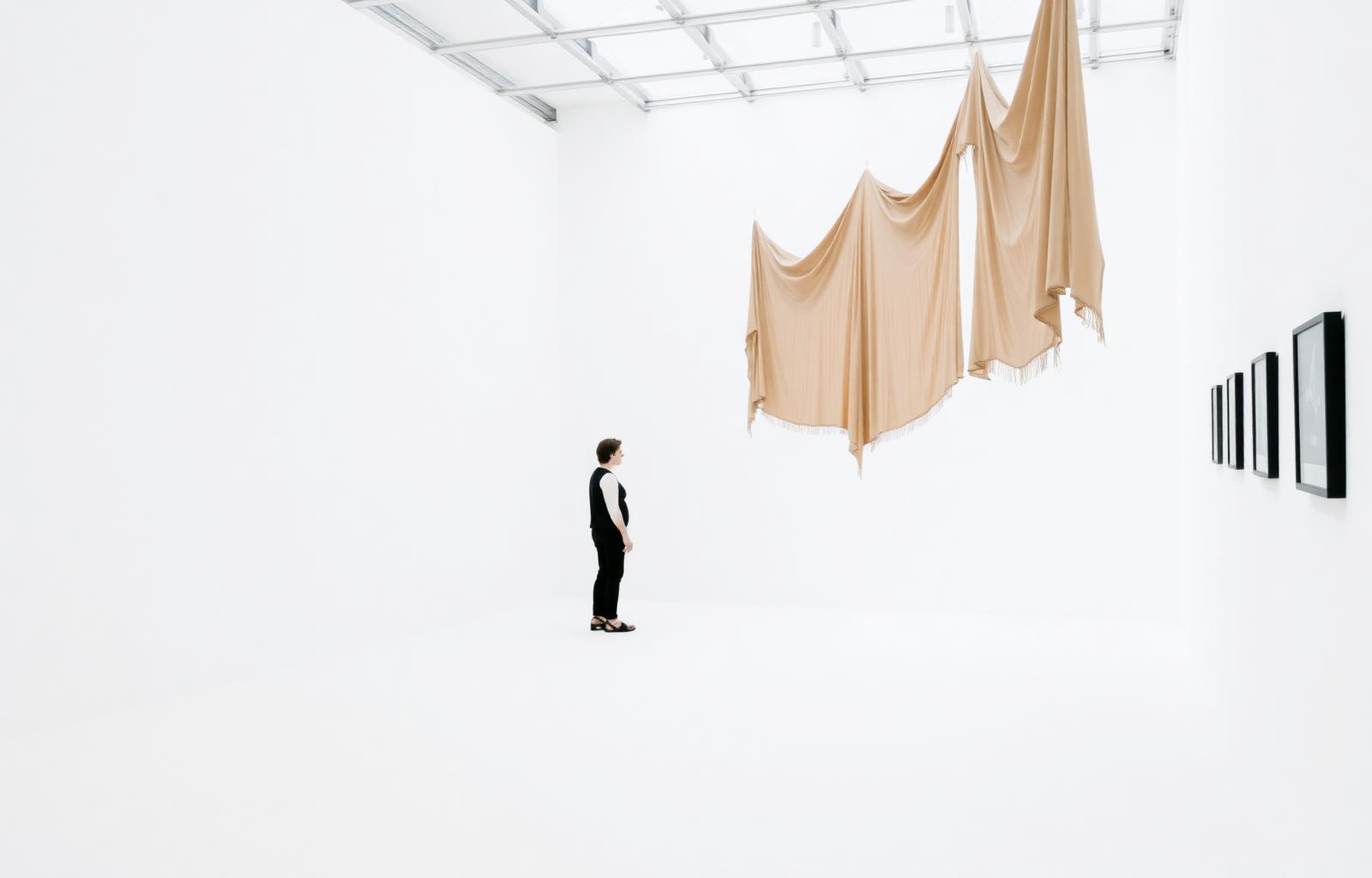
Three Works That Stayed After Venice.
Not a report from the Biennale. Only the three works that continued returning to mind on the flight home, in the following week, and in the month after that.
We are wary, always, of the ranked list. The Biennale in particular seems to invite one — best of, must-see, don’t miss — as though attention were a competition and the exhibition a leaderboard. What follows is not that. These are three works we noticed on the day and then, more importantly, kept noticing weeks afterwards, without meaning to.
One · a hanging cloth
A single length of pale fabric suspended in a bare white pavilion, moving very slowly in an air-current we could not identify.
The room was almost empty when we arrived. One visitor was already inside, standing very still. We stood a little behind them. It took maybe two minutes to notice that ; another two to notice that it was moving in a rhythm slightly slower than breath.
The connection, later, was to — to the way patience is not a subject in itself but a condition the work insists on before it will disclose anything at all.
Two · a room of small sounds
A sound installation the size of a walk-in closet, containing perhaps thirty tiny recorded fragments of domestic noise.
On the way small sounds — a kettle clicking off, a chair moved half a foot on a floorboard, the specific rustle of a broadsheet being folded — carried more weight than the twelve-screen pavilion three rooms over. On the way scale is almost never the point.
Three · a painting we almost missed
A small oil painting, hung a little too low, in a side room.
On the way the strongest work in the entire pavilion was the one hardest to see. On the specific pleasure of nearly walking past something, turning back, and being rewarded. On the discipline of hanging a painting where it will only be found by people slowing down.
“The best exhibitions continue editing our attention long after we leave.”
What we brought home.
Not three works. One question — a question that has been rearranging what we photograph, what we keep, and what we allow into the reading room ever since. The question is simply this: what would you make, if you trusted your audience to stand in a room for twenty minutes?
Elsewhere in this issue
The Long Afternoon