From the shelf
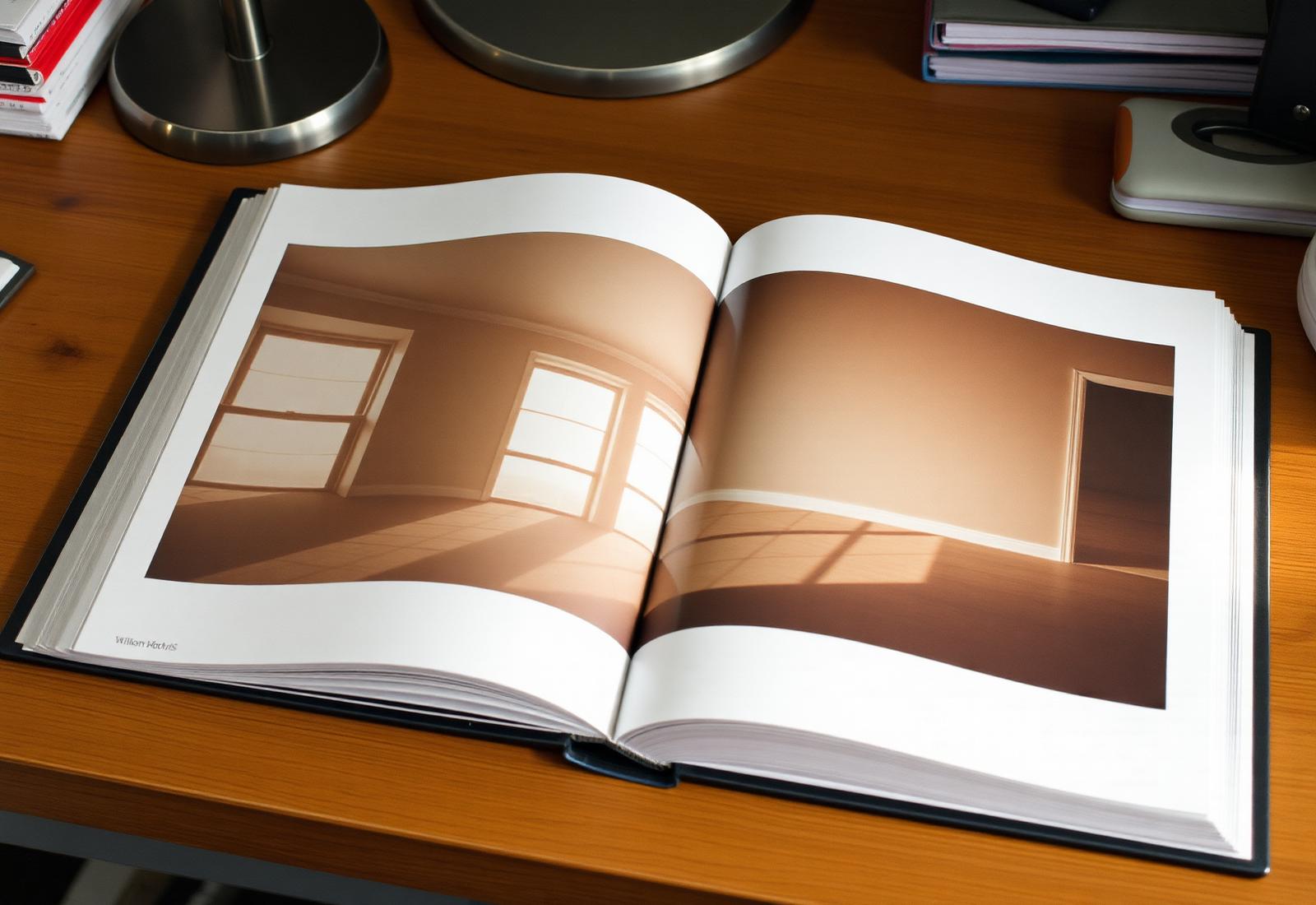
William Eggleston · Los Alamos.
A photobook found in a small shop in Ghent, carried home in a soft bag, and kept on the reading table for the eleven years since.
Where it was found.
A narrow shop off a canal in Ghent, the kind of shop whose owner does not look up when the door opens. The book was on a low shelf, in the section that had no sign. I did not know I was looking for it. I have never been able to explain why I bought it that afternoon and not any of the twenty afternoons before.
Why it stayed.
On the way most photobooks arrive with a great deal to say and, two or three re-readings later, run out. Eggleston’s do the opposite. They arrive quietly and slowly disclose more each year. On the way , two apartments, and considerable rearranging of the reading table.
“Some books earn their shelf by being reopened, not by being read.”
One spread always reopened.
A single spread — a suburban interior with a shaft of across the floor and, in the doorway, the suggestion of someone about to leave the frame. Nothing else happens in it. We come back to it four or five times a year. It has never stopped saying something new.
How it changed the way photographs are made here.
Before this book, I was still, faintly, embarrassed to photograph the ordinary. Eggleston is the reason I am not anymore. Colour is permitted. The plainly domestic is permitted. The half-empty glass on the table is a subject. It turns out this had been true all along; I had only been waiting for someone to say so, in a book of pictures rather than a paragraph of theory.
“The book didn’t teach us what to see. It made it acceptable to keep looking.”
Elsewhere in this issue
The Long Afternoon